
Set and Setting
Taking the Trip ... What to Expect from High Crimes, and When to Expect It.

Welcome to High Crimes!
This Substack is a companion to my book project of the same name. Both will offer a narrative history of American drug-control policies beginning in the mid-twentieth century, just before the commencement of the War on Drugs, until the still-evolving present, when we may be seeing the last days of that sticky, stubborn set of policies. Although opiates and other dangerous drugs, including alcohol, will figure into this history, my primary subjects will be laws, regulations, decisions, and actions relating to marijuana and psychedelics. The through-line of the story I will tell is the career of noted and notorious consciousness-expansion advocate, Timothy Leary (1920-1996).
There are four reasons for this focus.
First, public opinion about and the politics concerning these specific substances have shifted dramatically in recent years.
After nearly a century of general prohibition, the sale and use of marijuana has been substantially de-criminalized in almost half of the states, and federal prosecutors have de-emphasized marijuana enforcement nationally. Meanwhile, research exploring the potential use of psychedelic drugs for psychotherapeutic purposes has seen a revival after fifty years of disfavor among medical professionals and governmental regulators alike. Long regarded by most Americans as dangerous and even depraved, use of these mind-altering drugs have been de-stigmatized in a remarkably short period of time.
Second, despite the developments just mentioned, more than half of the states have not lifted prohibitions on marijuana, and Americans now face a patchwork of laws.
Also, despite excitement expressed in press accounts of a “Psychedelic Renaissance,” these drugs remain highly restricted under the Controlled Substances Act (CSA), the major federal statute regulating both “street” drugs and commercial pharmaceuticals since 1970. Both marijuana and psychedelics are listed in Schedule I, a classification that indicates that they are considered to have high potential for abuse, no accepted protocols for safe use even under medical supervision, and no currently recognized medical applications. As a consequence, over-eager researchers may be conducting clinical trials with unapproved drugs. Individuals engaging in a presumably “legal” commerce in cannabis risk prosecution if presidential priorities change. Users may inadvertently transgress laws simply by crossing from one jurisdiction to another.
Third, although Leary’s name will eventually appear in most of the countless books, articles, and websites that discuss the 1960s, the War on Drugs, or psychedelic drug research old and new, critical aspects of his historical role are often overlooked.
Among the lost facts is that the 45-year-old clinical psychologist’s rise to prominence as a charismatic champion of the youth-centered counterculture was contingent upon his desperate efforts to stay out of prison. In March 1966, sixty years ago this spring, Leary was tried in a federal courtroom in Laredo, Texas, convicted for possession of a few ounces of marijuana, and sentenced to 30 years’ incarceration. It was only after his legal troubles began that he testified about LSD and juvenile delinquency in the U.S. Senate, addressed 30,000 “flower children” at the Human Be-In in San Francisco, and most important, gave hundreds of speeches on college campuses. These appearances lay the foundation of Leary’s legend, and most were staged to raise money for his legal defense fund. He and his allies celebrated when he prevailed at the Supreme Court in 1969. Yet, his victory in United States v. Leary turned to ashes when the U.S. Congress responded to the landmark decision by passing the CSA in 1970, relegating marijuana and psychedelics to Schedule I, and setting the stage for the decades-long moratorium on research employing them.
Fourth, this will be a really good Trip: A Stranger-than-Fiction story full of true but “You Have Got to be Kidding Me” moments.
Over the course of a single decade, Dr. Timothy Leary was, successively, a reputable and rising social scientist, a controversial researcher, a convicted felon and tenacious appellant, a psychedelic prophet, and a fugitive radical who reportedly earned a place on President Richard Nixon’s enemies list. High Crimes readers will be shown how and why Leary became one of the most famous and indeed infamous figures of the 1960s, a villain to some, and a hero to others. I will not necessarily argue on behalf of either of these two views (you are encouraged to make their own judgments), but I will definitely take Leary’s ideas and actions seriously, using evidence from biographies, autobiographies, memoirs, monographs, histories, archives, and news accounts.
High Crimes will show how Leary evolved from a well-regarded social scientist into the famous (or infamous) High Priest of LSD, and demonstrate that his hard-fought court battles 60 years ago still matters to our understanding of the long War on Drugs.
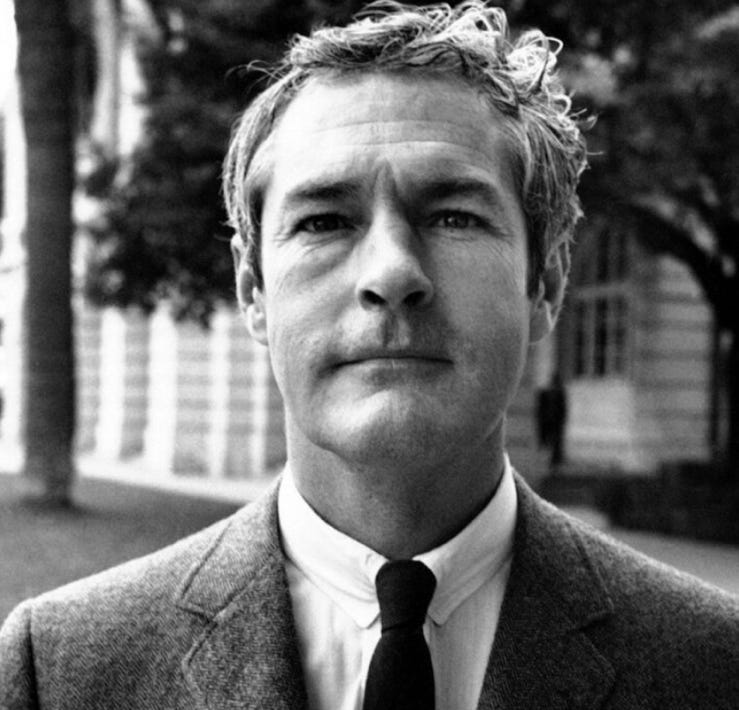
Timothy Leary, Ph.D, in early 1966
As a historian, I am interested in the questions, “why and how did we get here?” As a Substacker, I want to provide the answer to “why does it matter now?” As a storyteller, I need to provide an intriguing beginning, a dramatic middle, and a satisfying end.
Here is a summary of how I propose to accomplish these goals.
Part I: You say “middle-class liberal intellectual robot” like that’s a bad thing
Timothy Leary was one of the most influential and controversial public figures of the late 1960s, but he is less well-known now than he once was. For this reason, the first task of High Crimes will be to sketch Leary’s early biography to show how he became an advocate of psychedelic drug experimentation. This first “act” of High Crimes will also try to recover the contributions of many players in this drama that have been overshadowed by Leary’s fame. Why did he become the face of psychedelic research, when he was a “late adopter” of mind-altering substances? What was his role in the regulation of psychedelics around this time, which choked off research projects even before the substances were formally prohibited? Was the coming backlash inevitable, or was Leary the critical character?
Part II: Federal Felon and Politician of Ecstasy
The second section of High Crimes will show how the major cultural, political, and legal currents that informed the CSA in 1970 flowed from Leary’s marijuana bust just before Christmas in 1965, when Leary was vacationing with his young girlfriend, his teenaged son and daughter, and a male colleague. I am convinced that these courtroom battles are key to understanding Leary’s character, yet curiously, they receive the least space (and often none at all) in other accounts of Leary’s role in the counterculture. This is another reason High Crimes will be timely. To the best of my knowledge this will be the first detailed study of Leary’s legal legacy and its impact on the Drug War.
Part III: From Man on the Run to Renaissance Man
The third section of High Crimes will consider how Leary’s legacy continues to have impacts on the present-day. Leary was living as a hunted man in exile, but his name and crimes were frequently invoked as the committees met to design what became the Controlled Substances Act. The original scheduling decisions had remained essentially unmodified, although year after year, activists lobbied for reform. The CSA remains a powerful tool to enact drug-control agendas.